Can Economic Policy Prevent Collapse During War? The Ukrainian Case
Fellowship event by Oleksandra Moskalenko
- Date
- 16 April 2026
- Time
- 12:00 -14:00
- Location
- Oude Turfmarkt 145-147
- Room
- Sweelinck Room
In her lecture, she will explore the scale of the war shock, policy coordination under extreme uncertainty, and the role of international collective action in sustaining economic resilience. The discussion connects wartime macroeconomics to broader debates on resilience, complexity, and geopolitical fragmentation, highlighting implications not only for Ukraine but for Europe and beyond.

Why this question matters
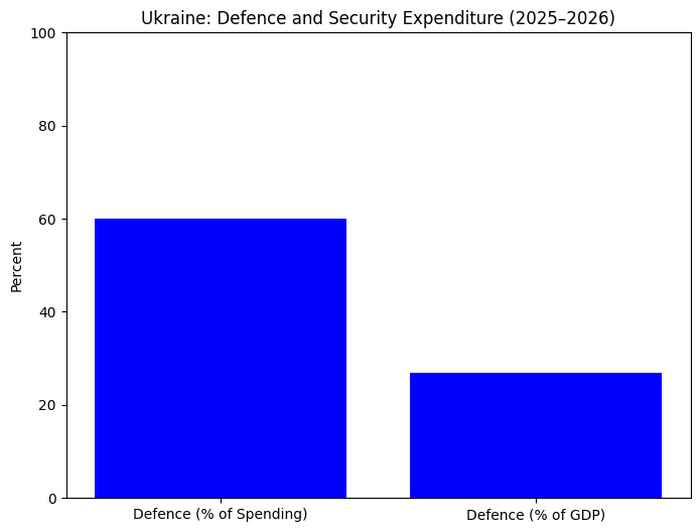
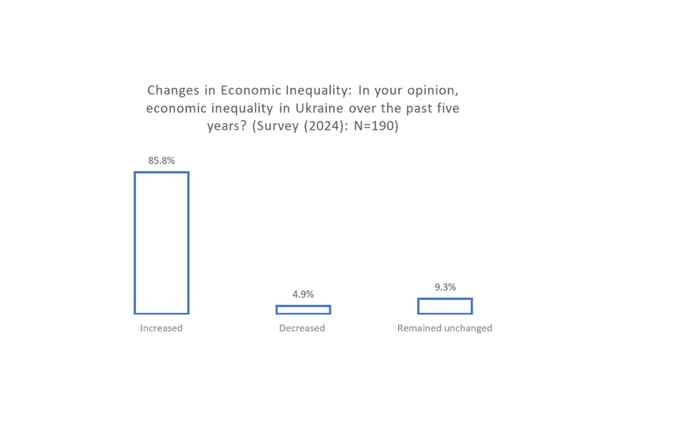
When a country goes to war, we expect economic collapse. Yet in Ukraine, banks continue to operate, inflation has been stabilised, the currency has survived, and the financial system remains functional despite massive destruction and prolonged uncertainty. After four years of full-scale war, the cost to people and institutions is enormous. Nearly 60 percent of the state budget has been redirected toward defence. Social expenditures have been compressed. Around one third of the population has been displaced, with negative social consequences and rising inequality and polarisation. The economy faces a extreme labour shortage. Infrastructure and production facilities are destroyed on a daily basis. Under such conditions, many economic models designed for peacetime no longer provide sufficient explanations.
The wartime macroeconomic challenge
This seminar asks a central question: how does an economy continue functioning under existential pressure?
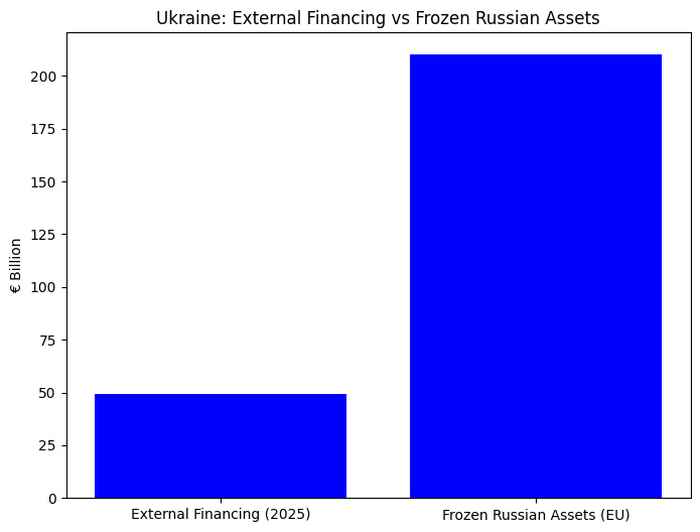
Ukraine’s macroeconomic stability has not been achieved in isolation. European Union support, international financial assistance, military aid, and humanitarian transfers have interacted with domestic policies in complex feedback loops. Economic survival becomes inseparable from international coordination and geopolitical positioning. The seminar will explore whether coordinated international action makes a measurable macroeconomic difference.
We will examine how fiscal and monetary authorities coordinate when expectations are fragile, resources are constrained, and survival itself becomes a policy objective. Wartime conditions blur the traditional boundaries between fiscal and monetary authority, raise the risk of fiscal dominance, and transform economic policy into a matter of sovereignty and institutional survival.
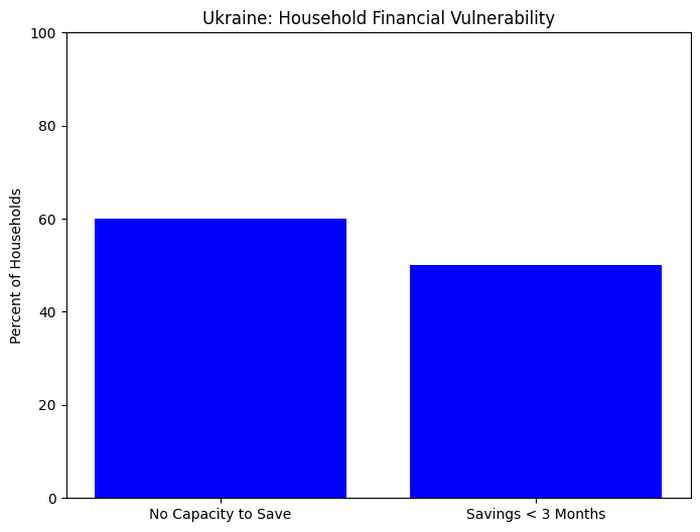
What happens to inequality when millions are displaced? How do households adapt? How is institutional credibility preserved under extreme uncertainty?
Ukraine and the Netherlands: interconnected economies
The Netherlands is one of Ukraine’s key European partners in trade,reconstruction planning, and institutional cooperation. Wartime macroeconomic stability is not only a domestic issue; it affects European supply chains, agricultural exports, energy markets, and geopolitical security.
Complexity, resilience, and lessons beyond war
Rather than viewing the economy as a perfectly rational system, this seminar approaches wartime macroeconomics as a complex adaptive process. The Ukrainian case invites us to reconsider what macroeconomic stability means when sovereignty, resilience, and uncertainty are deeply intertwined.
These lessons extend far beyond conflict zones. In a world marked by geopolitical fragmentation and recurring systemic shocks, understanding Ukraine’s experience becomes relevant for any economy facing radical uncertainty.
Interactive dimension
The seminar will combine empirical evidence, policy analysis, and conceptual discussion. Participants are invited to engage with the central question: what truly sustains macroeconomic stability when conventional assumptions break down?
Programme
| 12:00 | Lunch on arrival |
| 12:30 | Start fellowship event |
| 14:00 | End |