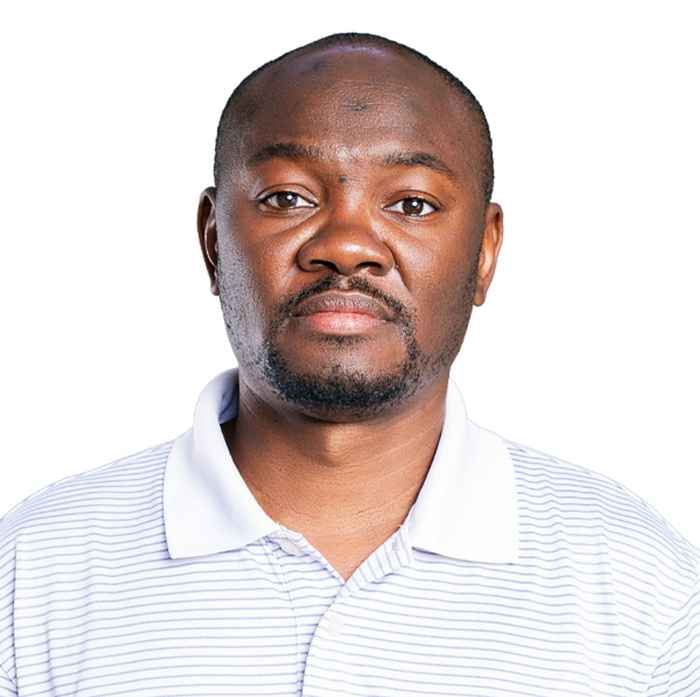
Michael O. Oyengo (Sep 2026 - Feb 2027)
Lecturer, Maseno University
My research
My research interests are in pure mathematics, mathematics education, and educational technology, with a particular emphasis on developing technological innovations for the teaching, learning, and assessment of mathematics in low-resource environments. My mathematical research includes analytic theory of polynomials, continued fractions and combinatorics. Alongside this theoretical work, my major current research focus is technology-enhanced mathematics education, especially the use of STACK for computer-aided formative assessment, immediate personalized feedback, and scalable assessment of large undergraduate mathematics cohorts in low resource environments.
IAS Fellowship
I will be working together with Dr Diletta Martinelli (University of Amsterdam) and Dr Jim Portegies (Eindhoven University of Technology) to investigate the impact of emerging technologies on mathematical communities in the Global South, with particular emphasis on Sub-Saharan Africa. The fellowship is situated within a rapidly changing technological landscape in which generative AI, proof assistants such as Lean, and other digital technologies are transforming mathematical research and education. The fellowship recognizes both the opportunities these technologies provide through online collaboration, large-scale communities, and tools that support teaching, learning, discovery and verification and the risk that unequal access to infrastructure and financial resources may deepen existing inequalities.
Within this broader fellowship agenda, my work will provide a practical and empirical focus on STACK integration and its piloting in Global South contexts. There is a need to open-source computer-aided assessment tools to the realities of Sub-Saharan African universities. These realities include but are not limited to large student cohorts, inadequate teaching and learning resources and inadequate provision of personalized feedback to support learning. The fellowship will therefore provide an opportunity to examine and further develop STACK-based teaching and formative assessment practices, integration with digital learning environments, and models for piloting and scaling these technologies in universities in the Global South. Particular attention can be given to ensuring that technological innovation is not simply transferred from the Global North, but is co-designed, tested and evaluated with mathematical communities in Africa, contributing to the IAS fellowship's broader concern that researchers and institutions in the Global South should meaningfully participate in decisions about how emerging technologies are developed and used.