Let Nature Talk: Inside “The Parliament of Things in Practice”
17 November 2025
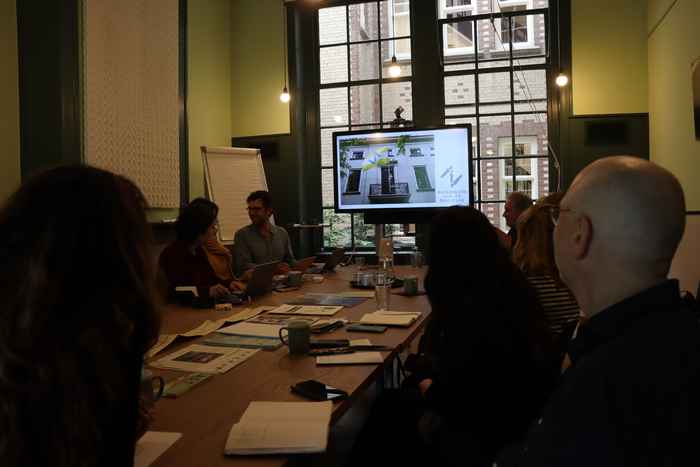
On September 26, 2025, the Institute for Advanced Study hosted The Parliament of Things in Practice, a workshop led by IAS Artist-in-Residence Harpo ’t Hart and curator Yu-Cheng Hung. The workshop followed The Confluence of European Water Bodies (21–24 September 2025), during which more than 35 water bodies — rivers, seas, glaciers, lagoons — were symbolically and institutionally represented by activists and researchers from across Europe.
Decentralising the Anthropocene
Harpo began by introducing the concept of the "Parliament of Things”. As the name indicates, Latour’s idea encourages us to was that we should distance ourselves from placing human beings at the centre of all political matters and instead grant non-human actors a “seat” in these conversations. Around the world, initiatives of advancing the legal personhood of nature, treating it on an equal footing, are emerging. In Spain, the Mar Menor Lagoon was granted legal personhood in 2022, becoming the first ecosystem in Europe to acquire this status.
Harpo has been working at the Embassy of the North Sea, a project founded in 2018 in the Hague, aiming to reflect on Latour’s idea in practice. One of its projects, for instance, revolves around a proposal for a human-sized Eel Park at the Oosterdok in Amsterdam, developed in collaboration with landscape architect Thijs de Zeeuw. The design envisioned a place where humans and eels meet on equal terms, guided by“eel-logic”, rather than solely on human perspectives on placement, construction and elements.
From the North Sea to Taiwan
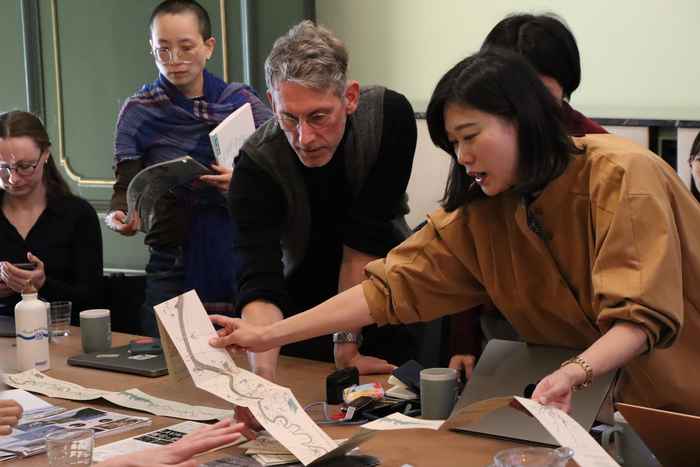
Yu-Cheng Hung then shifted the perspective to Taiwan, where the idea of the Parliament of Things is intertwined with local culture, river ecologies, and Indigenous worldviews. Her presentation focused on the Zeng-Wen River, one of Taiwan’s major rivers, and the subject of an ongoing research and art project titled One Thousand Names of Zeng-Wen River. The project revealed that the river is not a single identity, not just water; instead, it consists of fish, stones, ancestral spirits, irrigation systems, algae blooms, and seasonal flooding patterns. It exists as a plurality in a network of relationships.
One of her key points emphasised that representing a river means learning to listen: to currents, to sediment and to indigenous people who live in community with the river, and have done so long before nation-states drew borders around it. The process of letting nature have a seat implies to first listen, then translate, amplify, and negotiate.
What Does It Mean to Invite Nature to Talk?
At the end of the workshop, Harpo and Yu-Cheng opened the discussion to the participants and reflected together openly on the implications of the Parliament of Things. How do you convene a body that does not speak in human language? How do you claim to represent a river without speaking for it? When you stand as a spokesperson, to whom are you accountable, and how do you navigate conflicting interests? The answers remain uncertain. However, the mission is clear. As Harpo framed it: we must pick up voices already there, and amplify them through research, imagination, and collective care.