The Challenges of Our Time
2 April 2025
The urgency of existential risks
Over the past five years, the discourse on existential risks has taken on renewed urgency. These risks, encompassing mass casualties, potential extinction, and the collapse of modern civilization, are no longer hypothetical, but unfolding realities. One key focus of the workshop was the role of digital information systems, highlighting their dual nature in both mitigating and amplifying risks. While technological advancements provide tools for resilience, misinformation and digital surveillance pose significant threats to democratic governance and social stability.
Agents of change
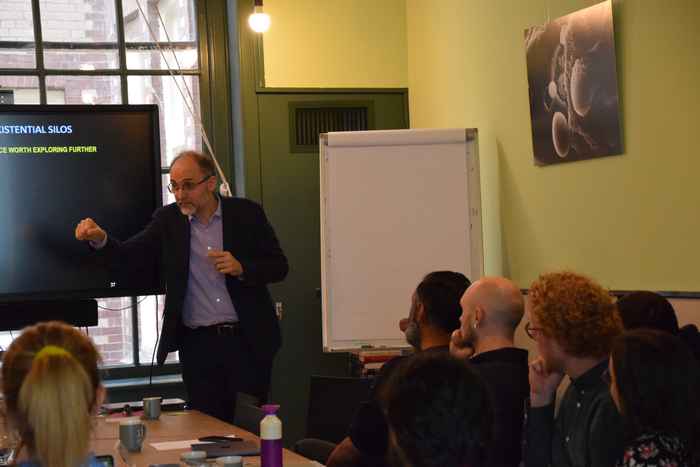
The workshop reviewed how contemporary global realities are reshaping existential risk concerns and encouraged participants to explore effective ways to address these pressing issues. Edward’s session fostered deep discussions and insights into how existential challenges and obstacles can be analysed and confronted in today’s world, and the role of scholars, academics, and public intellectuals in confronting these existential threats. Participants explored strategies for engaging with these issues through education, writing, mentoring, and civic participation, underscoring the responsibility of the academic community in shaping public discourse, influencing policy, and fostering interdisciplinary collaboration to tackle these challenges.