HOI-BrainMod
Workshop on Brain Modeling and High-Order Interactions
- Date
- 7 May 2025
- Time
- 09:00 -17:00
- Location
- Oude Turfmarkt 145-147
- Room
- Sweelinck Room
Integrating data-driven and modeling approaches is crucial for understanding and proposing mechanistic explanations of complex brain phenomena, such as healthy aging, consciousness, and neurodegeneration. In this context, high-order interactions offer a powerful framework, as they could reveal more informative features than traditional pairwise methods. Whole-brain modeling, in particular, allows us to investigate how functional brain states emerge from the underlying structural substrate and how they are modulated by factors such as neuromodulation changes, connectome disruptions, or external stimulation. Together, these integrative strategies push the boundaries of our mechanistic understanding of brain function and its alterations, for example, in neuromodulation, neurodegeneration, consciousness, and healthy aging.
Through seminars and hands-on tutorials, participants will learn about advanced biophysical modeling and high-order interactions with applications to functional brain data. Participants will discover how high-order interactions and whole-brain models are transforming our understanding of clinical and cognitive domains, with a particular focus on aging, neurodegeneration, neuromodulation, and consciousness.
About the speakers
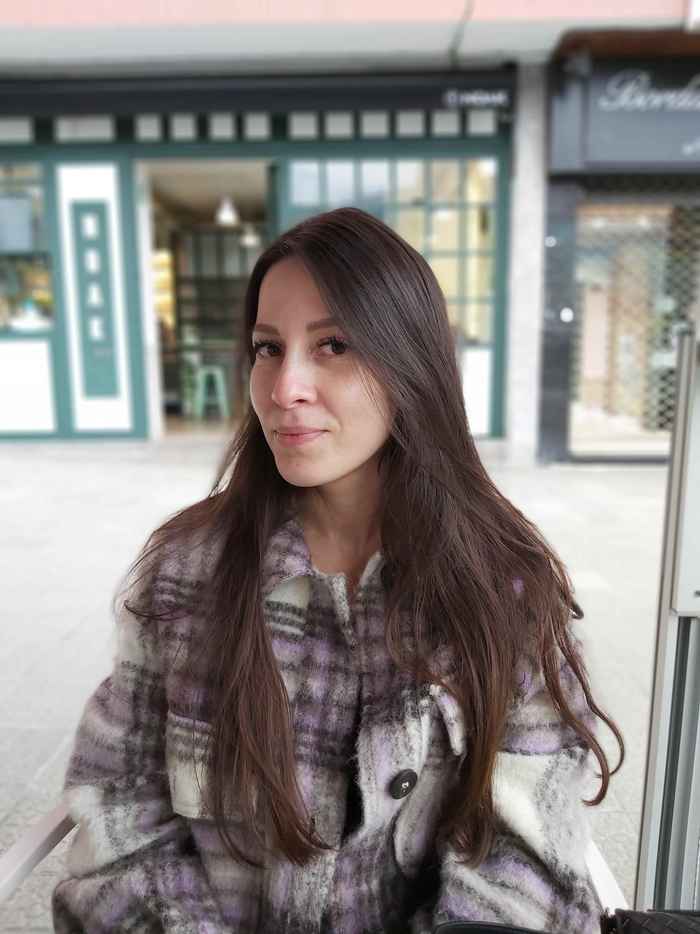
Marilyn Gatica is a Postdoctoral Research Assistant at Northeastern University London and IAS current fellow. She is deeply committed to integrating research and mentorship in computational neuroscience, with a passion for inspiring others and driving advancements that enhance patients' quality of life. Over the past two years, she has focused on non-invasive neuromodulation techniques, particularly transcranial ultrasound stimulation, to improve cognition and mental health.

Carlos Coronel studied at Trinity College in Dublin, Ireland. He holds a B.Sc. in Biology and earned his Ph.D. in Biophysics and Computational Biology from the University of Valparaíso. He has worked as a postdoctoral researcher at the Latin American Brain Health Institute (BrainLat) at Adolfo Ibañez University and is also an Atlantic Fellow for Equity in Brain Health at both Trinity College Dublin and the University of San Francisco, California. His research focuses on computational approaches to aging and dementia, biophysical modeling of chemical neuromodulation, and theoretical neuroscience. Using mathematical modeling, graph theory, and machine learning, Carlos investigates the workings of the brain.

Mattero Neri (Institute of Neuroscience of la Timone, Marseille, France) grew up in Italy and he has always been interested in investigating the fundamental principles that underlie human consciousness and intelligence. To build a strong theoretical foundation, he pursued a BSc in Mathematics (2020) and a Master’s degree in Complex Systems Physics (2023). He is currently a PhD candidate in Computational Neuroscience at the Institute de Neuroscience de la Timone. His research focuses on the complex interactions and information dynamics within systems ranging from the brain to societies and economies. Matteo Neri's work aims to: (i) develop quantitative tools to characterize interactions within complex systems, (ii) uncover the mechanisms that drive these interactions and emergent properties, and (iii) design methods to intervene, optimize, or repair these systems. Through this research, he aims to advance our ability to predict, understand, and control complex systems, with particular emphasis on applications in clinical neuroscience and artificial intelligence.
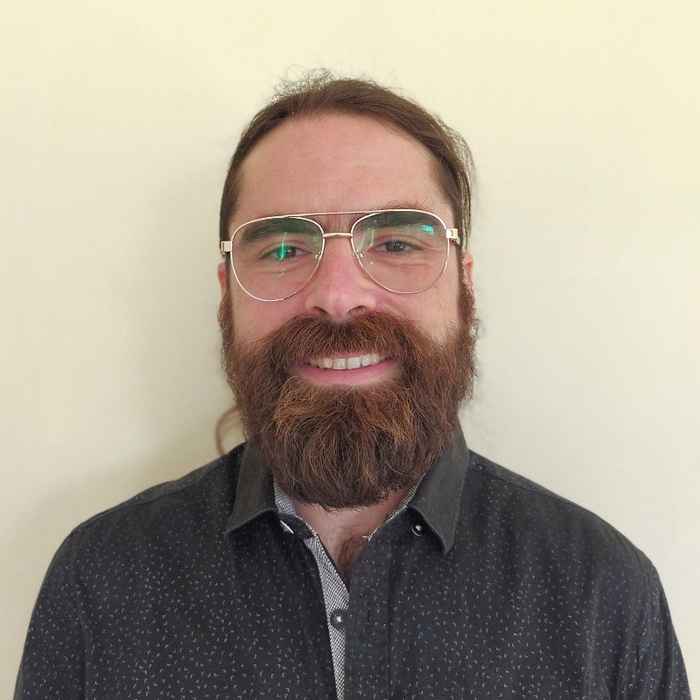
Ruben Herzog's (Paris Brain Institute, Paris, France) research lies at the intersection of biology, cognitive sciences, mathematics, and computation, with a focus on consciousness, computational neuroscience and open science. He leverages advanced tools from complexity science—network theory, information theory, and dynamical systems—to study the functional organization of the brain and its links to cognition, brain health and non-ordinary states of consciousness. Ruben Herzog completed his education at the Universidad de Chile, earning a BSc in Biology (2009-2012) and an MSc in Biology with a neuroscience focus (2013-2016). His PhD in Biophysics and Computational Biology (2018-2022, Universidad de Valparaíso) was dedicated to building mechanistic frameworks linking whole-brain mathematical models to consciousness states, such as those induced by psychdelic drugs. In the first post-doc experience (UAI, Chile) he developed neuroimaging-based biomarkers for neurodegenerative diseases based on brain high-order interactions. In the second post-doc (ICM, France) he studied the neural signatures underlying subjective-objective sleep discrepancy and found that this discrepancies can be highly attributed to the coexistence of both wake and sleep like brain activity during sleep. Currently, Ruben works at the IFISC (Palma de Mallorca, Spain), where he investigates the mechanisms underlying the emergence of high-order behaviour in the brain.
About the organiser
Marilyn Gatica is currently a Fellow at the Institute for Advanced Study (IAS) in Amsterdam and a Postdoctoral Research Assistant at Northeastern University London. She is deeply committed to integrating research and mentorship in computational neuroscience, with a passion for inspiring others and driving advancements that enhance patients' quality of life. Over the past two years, she has focused on non-invasive neuromodulation techniques, particularly transcranial ultrasound stimulation, to improve cognition and mental health. This research requires a collaborative and multidisciplinary approach, encompassing participant recruitment, neuromodulation techniques, data preprocessing, and advanced mathematical modelling to predict and characterize stimulation effects. Marilyn's research interests include high-order interactions, whole-brain modeling, healthy aging, neurodegeneration, and non-invasive brain stimulation.
Programme
| 8:30 | Registration & coffee |
| 9:00 | Opening words, introduction, workshop overview (Marilyn Gatica) |
| 9:30 | Basics of whole-brain modeling (Carlos Coronel) |
| 10:30 | Coffee break |
| 11:00 | Tutorial I and II: Whole-brain modelling fitting and application (Carlos Coronel, Marilyn Gatica) |
| 12:30 | Lunch |
| 13:30 | Information Theory (Matteo Neri) |
| 14:15 | Tutorial III: HOI package (Matteo Neri) |
| 15:00 | Coffee break |
| 15:30 | Examples of applications of high-order interactions (Ruben Herzog) |
| 16:15 | Tutorial IV: THOI package (Ruben Herzog) |
| 16:55 | Closure words |