Make small changes for yourself and transform society
Viral Justice book presentation by Professor Ruha Benjamin
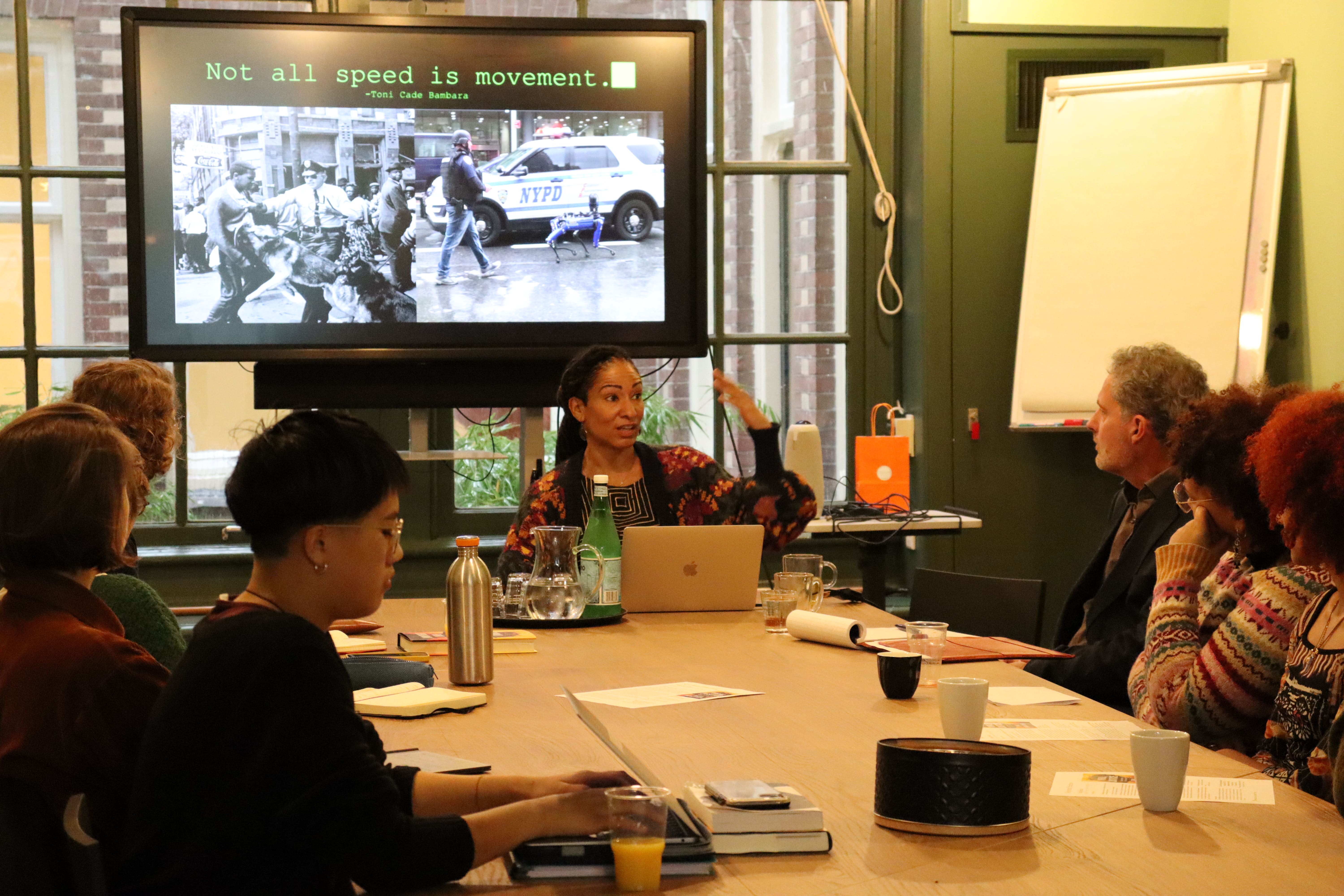
Groundbreaking research on race, technology, and justice, such as in her book Race after Technology, is what Professor Ruha Benjamin has been known for. Being used to focus on big structural changes, the Covid-19 pandemic and anti-Black police violence inspired her to rethink the importance of small, individual actions. This rethinking led her to write latest book Viral Justice, which explores how we can transform society through the choices we make every day. On Monday 7 November the Institute for Advanced Study proudly hosted Benjamin in a 2 hour session to discuss her work “Viral Justice: how we grow the world we want” with a diverse group of students from programs across the University of Amsterdam.
Racial bias in technology
During the session prof. Benjamin illustrated the various racial biases in technology and artificial intelligence, and discussed relevant examples ‘closer to home’ such as The Dutch benefits scandal.
Beyond technology, she also highlighted the wider underlying issue of biases in representation that are reflected in technological designs such as healthcare applications. Examples ranged from popular culture to training methods of police officers in the US doing shooting target practice using pictures of Black men, ‘By making small changes, which can add up to large ones, one can transform relationships and communities,’ prof. Benjamin says. To take the police as an example, counter-narratives popped-up on social media. White people were taking their own headshots and publishing them online with the hashtag "#usemeinstead". These small actions, speak up against racial bias, and can make the world a more just and joyful place step by step.
Find your own plot
Prof. Benjamin stressed the importance of speaking up and making changes for yourself that could spread virally and have exponentially positive effects. She ended with an invitation to understand ourselves as "pattern makers" and to find our own plot where we can make a difference.