Sustainability transitions in a transdisciplinary world
IAS policy fellowship event by Albert Faber
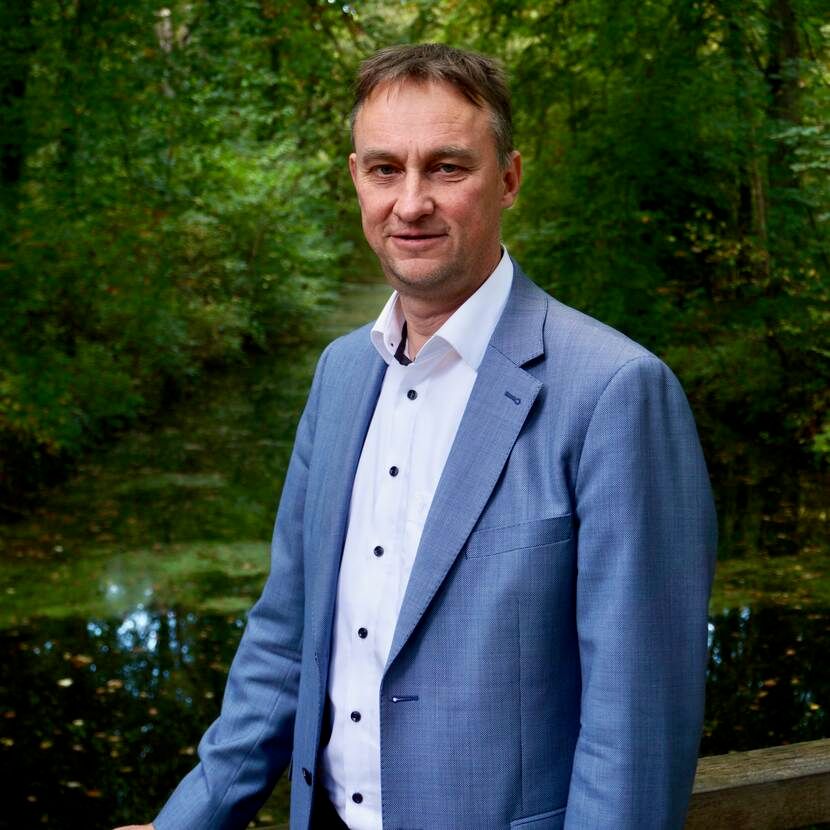
During his fellowship event, policy-fellow Albert Faber from the Netherlands Scientific Climate Council (WKR) will examine how wicked issues like sustainability transitions can be tackled in the transdisciplinary world.
Event details from: Sustainability transitions in a transdisciplinary world
- Date
- 26 May 2026
- Time
- 12:00 – 14:00
- Room
- Sweelinck Room
Scientific insights are crucial for policy-making, particularly when dealing with complex, wicked problems. This is particularly the case in the field of so-called transitions to sustainability. Transition theory aims to understand transformative and direct social change toward a more sustainable world. As such, it has become an important conceptual core for sustainability policy.
Transition theory comprises multiple schools of thought on how social change occurs, with some shared but often implicit conceptual assumptions. For example, it is often stated that social change occurs through tipping points that can be identified and used to direct changes. Another key tenet highlights the central role of the government as a driver for social change.
Such assumptions travel from theory to policy practice. To understand transformative patterns of change, the underlying (normative) assumptions should be thoroughly discussed and assessed. Furthermore, the travel of such concepts is not a given. At the nexus of science and policy, many institutions, mechanisms, and people work to facilitate productive interaction. This nexus needs to be well understood in order to understand and improve the legitimacy and effectiveness of policy.
This inaugural address will explore some normative conceptual assumptions in transition theory and reflect on how these assumptions percolate in policy strategies. I will suggest some pathways to explore in my policy fellowship for IAS, using the institute as a hub to bring together researchers and policymakers. I aim to bring together our networks in science and policy for discussion and debate, for collaboration and cross-fertilisation. The outcome is uncertain, but there are some directions: policy-relevant scientific advice, mutual understanding of science and policy, and a better use of scientific insights in strategic policy-making.
Programme
12:00 | Lunch on arrival |
12:30 | Start fellowship event |
14:00 | End |