Cognitive adaptation to harsh and unpredictable environments (hybrid)
In this lecture organized by the Centre for Urban Mental Health, Dr. Willem Frankenhuis will argue how the human species has evolved the capacity to adjust to certain forms of childhood adversity, highlighting recent research on the effects of test content on cognitive performance.
Event details from: Cognitive adaptation to harsh and unpredictable environments (hybrid)
- Date
- 30 October 2024
- Time
- 16:00 – 17:00
- Room
- Library
I will begin by conceptualizing evolution and development as nested processes operating on different timescales. Then I will argue that the human species has evolved the capacity to adjust to certain forms of childhood adversity — such as exposure to violence, resource insecurity, and low and inconsistent parental care — which are more prevalent in deprived neighborhoods than affluent ones. Such developmental adaptations may include hidden talents, abilities enhanced by adversity, and reasonable responses, decisions and behavior tailored to the demands of adverse environments.
Understanding such adaptations promotes a well-rounded view of psychological functioning in adverse conditions. Such a balanced view has implications for education, policy, and intervention. Specifically, the better we understand stress-adapted cognition, including both vulnerabilities and strengths, the more effectively we can tailor education, jobs, and interventions to suit the needs and potentials of those affected. A balanced view also provides a new pathway to improving mental health in the city, particularly in deprived neighborhoods: Using strengths and strategies as building blocks for success may boost confidence, motivation, and performance in people who suffer from stigma and hardship. As a case study, I will highlight recent research on the effects of test content (e.g., money, faces, geometric shapes) on cognitive performance.
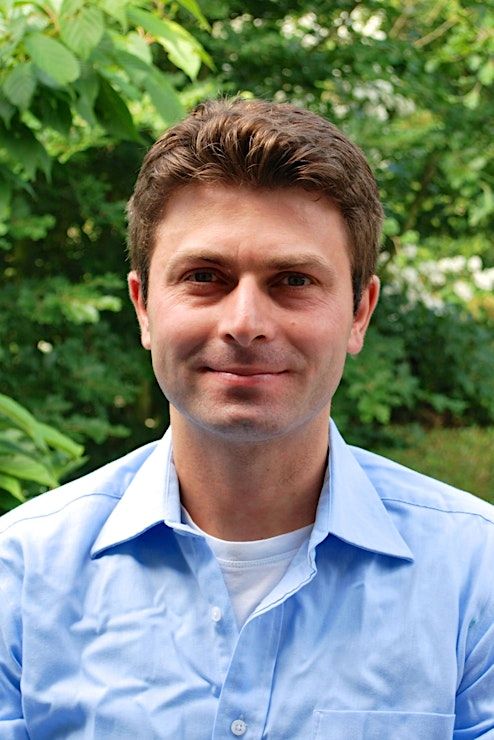
About the speaker
Willem Frankenhuis is Associate Professor at the Institute for Biodiversity and Ecosystem Dynamics of the University of Amsterdam. He is also Senior Researcher at the Max Planck Institute for Research on Crime, Security and Law in Germany. Before his current position, he worked at Utrecht University (2020-2023) and Radboud University (2012-2020). He studies how people develop in harsh and unpredictable conditions. His empirical work focuses on ‘hidden talents’, abilities enhanced by adversity, and ‘reasonable responses’, decisions and behavior tailored to the demands of adverse environments. In his theoretical work, he uses mathematical modeling to understand how adaptive processes operating on different timescales—evolution, development, and learning—tailor individuals to their environments.
Programme
16:00 | Presentation |
16:30 | Q&A |