Causality and complex mental health questions: Combining insights using triangulation
Kick-off lecture by Jorien Treur, Margot van de Weijer and Robyn Wootton
Jorien Treur, Assistant Professor at Amsterdam UMC, Margot van de Weijer, Postdoctoral Researcher at the Department of Psychiatry, Amsterdam UMC, and Robyn Wootton, Lecturer in Psychological Science at University of Bristol, are fellows at the IAS. They will kick off their fellowship with a lecture.
Event details from: Causality and complex mental health questions: Combining insights using triangulation
- Date
- 26 February 2024
- Time
- 12:00 – 14:00
- Room
- Sweelinck Room

Causality and complex mental health questions: Combining insights using triangulation
Does smoking causally increase depressive symptoms? Do higher levels of physical activity causally reduce stress? These are examples of causal mental health questions that are highly complex, because there are many (confounding) explanations that should be ruled out before causality can be inferred.
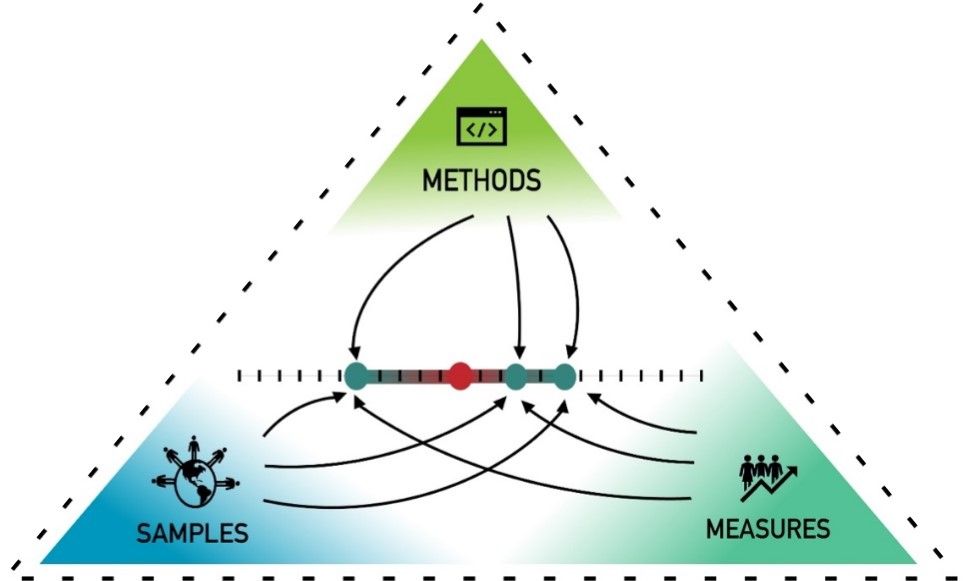
One approach to get closer to causal insights is through the process of triangulation: by explicitly combining insights from different methods in one study, our reliance on any one set of assumptions and limitations is minimized, and can more reliably assess causality. While triangulation studies are increasingly common, there are many unanswered questions with respect to how insights from methods from varying disciplines can be compared and integrated. During the fellowship at the IAS, Jorien Treur, Margot de Weijer and Robyn Wootton, aim to answer the question: “How can we use insights about causality from different fields to improve triangulation (the process of integrating different research approaches, Fig 1) and answer complex mental health questions?”.

Given their specialization in quantitative genetics (i.e., behavior genetics, molecular genetics, gene-environment interplay), they devote special attention to the integration of causal methods that make use of genetic data or genetic relatedness, such as Mendelian randomization, a method where groups with different levels of genetic risk for an exposure are compared. At IAS, their goal is to complement and extend their knowledge with approaches to causal inference from other disciplines.
For this kick-off lecture, Jorien Treur, Margot de Weijer and Robyn Wootton will explain how family-based methods and Mendelian randomization can be used to control for certain biases when examining causal questions.
In addition, they will introduce the concept of triangulation, and outline some of the (unresolved) issues. By presenting these ideas to the IAS community, they hope to benefit from the wide-ranging interdisciplinary perspectives that could contribute to this topic.
Programme
12:00 | Lunch on arrival |
12:30 | Welcome & introduction by Huub Dijstelbloem |
12:40 | Lecture by Jorien Treur, Margot van de Weijer and Robyn Wootton |
13:40 | Q&A |