Creating a New Paradigm for Research on Social Media
Lecture by Prof. Chris Bail
The IAS, in collaboration with the AISSR, will host a lecture by visiting professor Dr. Chris Bail of Duke University. The talk will examine the politically fraught topic polarization, specifically looking into the relationship between political attitudes and behaviors and the technologies of social media.
Event details from: Creating a New Paradigm for Research on Social Media
- Date
- 21 June 2023
- Time
- 11:00 – 13:00
- Room
- Sweelinck Room
Scholars who study social media face a range of challenges including a lack of access to high quality data and an inability to conduct experiments in real world settings. Because of these challenges, most research examines the small amount of data that social media companies make available to scholars in a descriptive manner. This situation severely limits the capacity of researchers to examine how the design of social media systems shapes human behavior. I propose a new paradigm for social media research wherein scholars collaborate to create their own social media platforms for scientific research. I present two recent field experiments conducted on such platforms to demonstrate their promise. The first field experiment examines how anonymity shapes political polarization. The second field experiment examines how gendered avatars shape political persuasion. I conclude by offering insights about how these types of platforms could be scaled to examine a much broader range of topics via an open-source software collaboration between a large group of researchers, not unlike CERN.
Programme
11:00 | Lecture by Chris Bail |
12:00 | Q&A |
12:30 | Lunch |
13:00 | End |
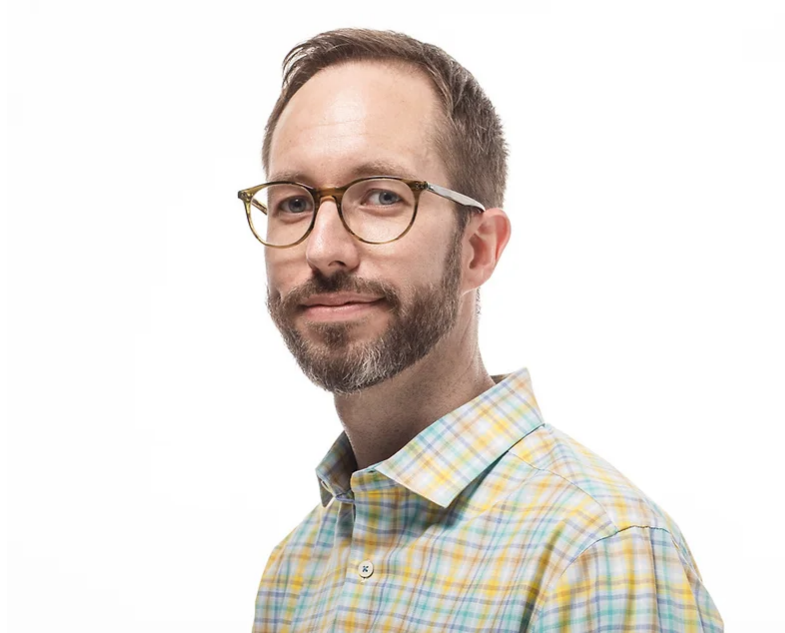
About Chris Bail
Chris Bail is Professor of Sociology, Political Science, and Public Policy at Duke University, where he directs the Polarization Lab. He is the author of Terrified: How Anti-Muslim Fringe Organizations Became Mainstream and Breaking the Social Media Prism: How to Make our Platforms Less Polarizing. He is one of the world’s foremost proponents of Computational Social Science.